
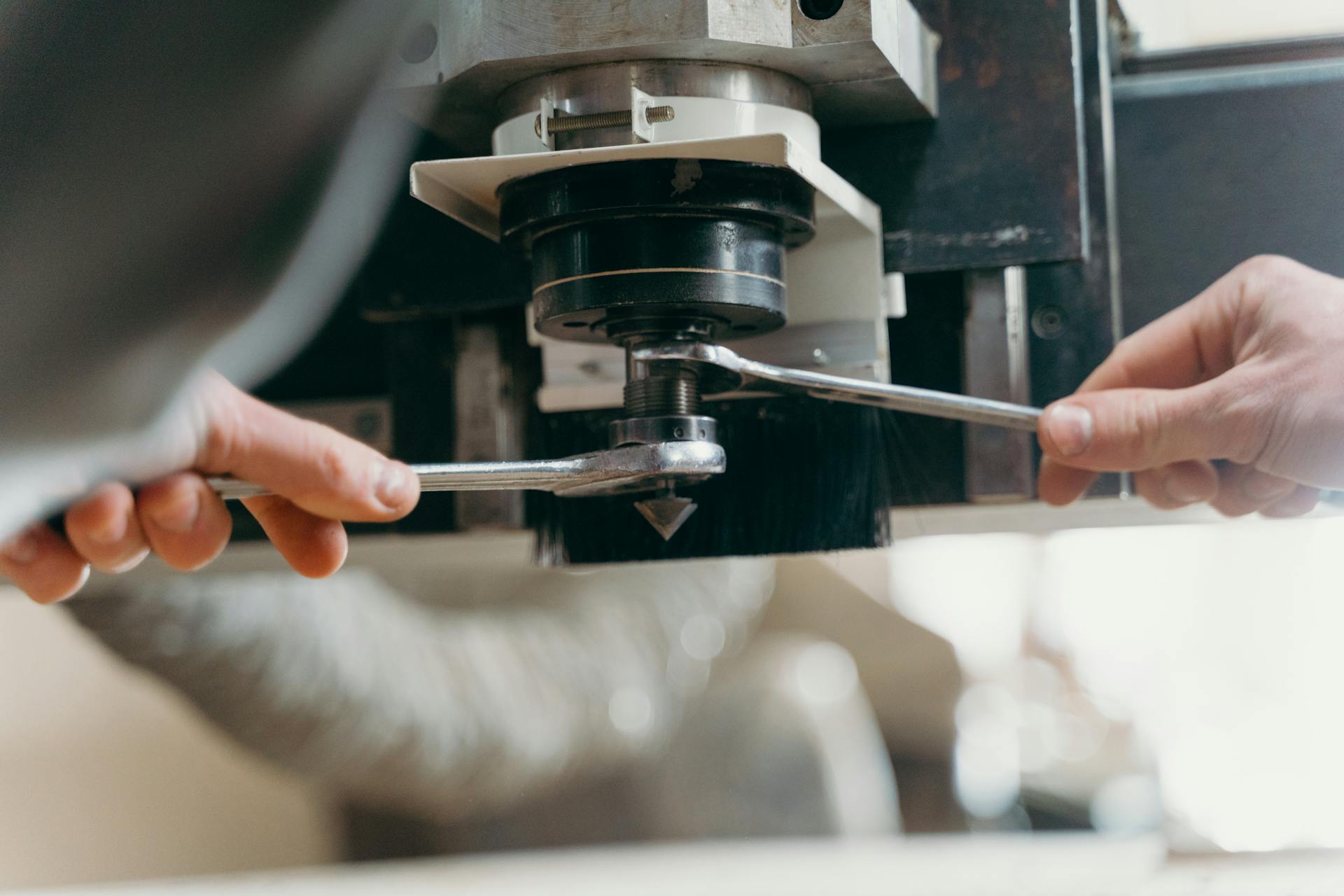
CNC machining is a highly advanced manufacturing process that uses computer-controlled equipment to produce precision components from metal and other engineered materials. By combining digital design, automated toolpaths, and high-performance machinery, CNC machining delivers exceptional accuracy, repeatability, and efficiency. This service plays a critical role in modern industrial production, supporting industries that demand tight tolerances and consistent quality.
A comprehensive CNC machining service includes not only the operation of CNC milling machines but also advanced CNC programming, digital design integration using professional engineering software, and high-precision component manufacturing. Through the integration of engineering expertise and advanced technology, CNC machining ensures reliable production outcomes across short runs, prototypes, and large-scale manufacturing projects.
With full digital workflow management and modern machining centers, CNC services provide efficient solutions for complex geometries and demanding performance specifications.
CNC machining operates through computer numerical control systems that guide machine tools along programmed paths. This automation allows for extremely precise material removal, achieving tight dimensional tolerances and smooth surface finishes.
Precision is maintained across repeated production cycles, ensuring that every component matches the original specifications. This level of repeatability is essential for industries where part consistency directly impacts safety, performance, and assembly compatibility.
CNC machining supports a wide range of materials, including:
Aluminum alloys
Carbon and stainless steels
Tool steels
Brass and copper
Engineering plastics
Composite materials
Material selection depends on mechanical requirements, environmental exposure, and intended application. Machining parameters are adjusted to match material characteristics, ensuring optimal cutting performance and surface integrity.
Modern CNC machines are capable of multi-axis movement, allowing the production of complex geometries that would be difficult or impossible using conventional machining methods. Multi-axis machining enables the creation of intricate contours, pockets, slots, and detailed surfaces within a single setup.
This capability reduces repositioning time, improves accuracy, and shortens production cycles while maintaining high dimensional consistency.
CNC milling is a fundamental machining process in which rotating cutting tools remove material from a workpiece to achieve a desired shape. Controlled by computer programs, milling machines perform operations such as:
Face milling
Slot milling
Contour milling
Drilling and tapping
Pocketing
Profiling
Each operation is precisely executed according to programmed instructions, ensuring consistent material removal and exact geometry.
Advanced CNC milling machines operate on three, four, or five axes, allowing simultaneous movement in multiple directions. Multi-axis milling enhances efficiency and precision by reducing the need for manual repositioning.
Five-axis milling, in particular, enables the production of highly complex parts with angled surfaces and intricate features. This approach improves surface finish, reduces setup time, and enhances overall productivity.
CNC milling provides exceptional control over surface quality and dimensional accuracy. Cutting speeds, feed rates, and tool selection are carefully optimized to achieve the desired finish.
Tolerances are maintained through calibrated equipment, precise programming, and consistent process monitoring. This ensures that machined components meet strict engineering standards and functional requirements.
CNC programming is the foundation of successful machining operations. Skilled programmers translate engineering drawings and 3D models into machine-readable instructions that control cutting movements and sequences.
Using advanced programming software, engineers define toolpaths, cutting depths, speeds, and machining strategies. These programs ensure efficient material removal while minimizing tool wear and cycle time.
Effective CNC programming focuses not only on accuracy but also on efficiency. Optimization techniques include:
Selecting optimal cutting tools
Reducing unnecessary tool changes
Minimizing idle machine time
Planning efficient machining sequences
Well-developed programs enhance productivity, reduce operational costs, and ensure consistent output quality.
Before execution on the machine, CNC programs are often simulated digitally to detect potential collisions, interference, or inefficiencies. Simulation tools allow programmers to verify tool movements and identify adjustments before production begins.
This proactive approach reduces the risk of material waste, machine damage, and downtime, ensuring smooth and reliable machining operations.
Modern CNC machining services integrate advanced design software to streamline the transition from concept to production. Engineering teams use professional CAD platforms to create detailed 3D models and technical drawings.
Solid modeling software allows precise design of components, including complex assemblies and intricate geometries. These models serve as the foundation for generating accurate CNC programs.
EdgeCam software plays a crucial role in converting 3D designs into optimized machining strategies. It allows programmers to define cutting paths, simulate machining operations, and refine processes for maximum efficiency.
The integration between design and machining software ensures seamless data transfer, minimizing errors and improving accuracy. Toolpaths generated through advanced software maintain tight tolerances and consistent results.
Digital design tools also enable rapid modification and refinement of component geometry. Changes can be implemented quickly, allowing clients to update designs without disrupting production schedules.
By combining digital modeling and machining expertise, CNC services ensure that components are manufactured exactly as designed while maintaining production efficiency.
High-precision component manufacturing is a defining feature of CNC machining services. Components are produced to exact measurements, often within microns of specified dimensions.
Precision measurement tools such as coordinate measuring machines and digital inspection systems verify dimensional accuracy. Consistent quality control ensures that every part meets defined specifications.
CNC machining supports both prototype development and full-scale production. During the prototype stage, single or small batches are produced to validate design and functionality.
Once approved, production scales efficiently without compromising precision. Automated machining processes ensure repeatability across larger volumes while maintaining strict quality standards.
High-precision machined components are essential in numerous industries, including:
Industrial machinery
Automotive systems
Aerospace applications
Medical devices
Electronics and instrumentation
Each industry requires reliable performance and dimensional consistency, both of which are achieved through advanced CNC machining processes.
Quality assurance is integrated throughout the machining process. Inspections may include dimensional measurement, surface roughness evaluation, and material verification.
In-process monitoring ensures that deviations are detected early, allowing corrective action before production continues. This structured approach maintains high standards of consistency and reliability.
CNC machining services focus on continuous improvement through process analysis and performance monitoring. Feedback from inspection results and production metrics informs optimization efforts.
Adjustments to tooling, programming, and machine calibration enhance efficiency and precision over time.
CNC machining services combine advanced milling technology, expert programming, digital design integration, and rigorous quality control to deliver high-precision components. By utilizing professional design software and optimized machining strategies, manufacturers ensure accurate and efficient production.
From detailed CAD modeling and EdgeCam programming to multi-axis CNC milling and final inspection, every stage is managed with precision and technical expertise. Whether producing prototypes or large production batches, CNC machining remains a cornerstone of modern manufacturing, delivering reliable, high-performance components that meet the highest engineering standards.


